






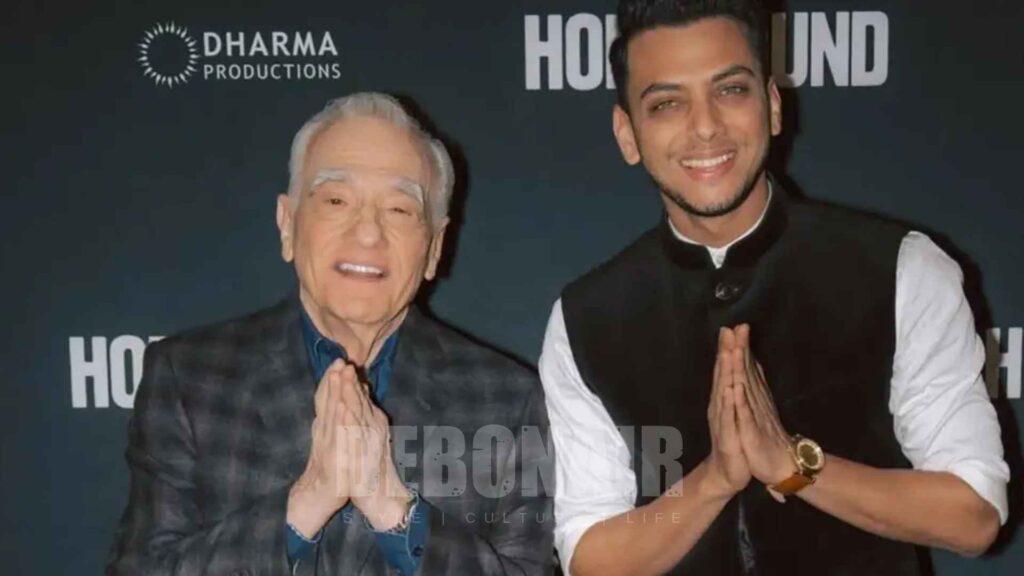
The room was quiet in that particular way that only people who love cinema understand. Not silent, just holding its breath. Vishal Jethwa remembers it clearly, the kind of memory that doesn’t blur with time but sharpens. A doorway. A pause. And then Martin Scorsese, not arriving with thunder but with calm, as if legends don’t need announcements anymore.

For Jethwa, this moment did not feel cinematic. It felt personal. The Homebound team had gathered during the film’s Oscar campaign in the United States, nerves buzzing, palms probably damp, smiles rehearsed and forgotten all at once. Scorsese kept the room empty. He entered from behind. No grand speech. No performance. Just presence. Jethwa has said it felt unbelievable, not because Scorsese spoke about their film, but because he had watched it, liked it, and then chose to share stories of his own life. They listened. Everyone did. You listen when someone like Scorsese talks, not because you want to impress him, but because you want to absorb whatever gravity he carries with him into a room.
Homebound, India’s official Oscar entry, had already changed Jethwa’s internal weather before that meeting. When the news broke, he needed two or three days to process it. That detail says everything. Some careers explode loudly. Others shift quietly, tectonic plates moving beneath your feet until you realize the ground is no longer the same. Jethwa belongs to the latter category. Offers started coming in. Different kinds of films. Roles that previously felt out of reach suddenly wanted his number. The industry, always watching from the corner of its eye, had adjusted its gaze.
And yet, just like that, his story isn’t only about arthouse prestige and Oscar corridors. It is also about standing in front of Salman Khan on a mainstream Bollywood set, under blinding lights, sharing frames in Tiger 3. If Scorsese was reverence, Salman was aura. Jethwa has spoken openly about loving that aura, the kind that doesn’t need to assert itself. Salman Khan, for all the mythology around him, reportedly treated the set with a quiet assurance that only comes from decades of superstardom. Working with him was not just a box ticked on a career checklist. It was a grounding experience, a reminder that mass cinema has its own discipline, its own rhythm, its own kind of magic.
There’s something poetic about these two experiences existing side by side in Jethwa’s timeline. On one end, a Hollywood legend who speaks softly and listens to silence. On the other, a Bollywood megastar whose very stillness commands attention. Both encounters seem to have left him more reflective than dazzled. That might be his quiet superpower.
What makes Jethwa’s rise compelling is not speed but texture. He doesn’t talk like someone who believes he has arrived. He talks like someone who is watching the doors open and wondering which ones he should walk through carefully. Homebound did not just put him on an international radar. It reframed how he sees himself within the craft. Being validated by Scorsese, even indirectly, does something to an actor’s spine. It straightens it. But it doesn’t inflate it.
During interviews from December 27 and 28, he spoke about that meeting as a lifetime memory, not a career flex. That distinction matters. In an era where proximity to greatness is often milked for social currency, Jethwa’s recollection feels inward. He remembers how Scorsese spoke more than how he looked. He remembers listening. He remembers feeling small in the best way possible.

And then there is the industry whiplash. From intense, rooted storytelling in Homebound to the scale and spectacle of Tiger 3. From Oscar campaigns in the US to commercial juggernauts back home. Truth is, not every actor can move between these worlds without losing something essential. Jethwa seems intent on keeping his center intact. He has acknowledged that the kinds of scripts coming his way now are ones that were simply not offered before. That awareness carries responsibility. Choice becomes heavier when abundance arrives.
It is tempting to frame this chapter of his life as a turning point, but it feels more like an alignment. The work caught up with the belief. The belief caught up with the work. Meeting Scorsese didn’t change who he was. It confirmed something he was already becoming. Working with Salman Khan didn’t overshadow his individuality. It sharpened it.
And just like that, Vishal Jethwa stands at an intersection many actors dream of and few navigate gracefully. Global recognition brushing shoulders with mass appeal. Quiet validation alongside roaring fandom. The next steps matter, but not in the way people expect. Not in terms of scale or budget or buzz. They matter in terms of intention.
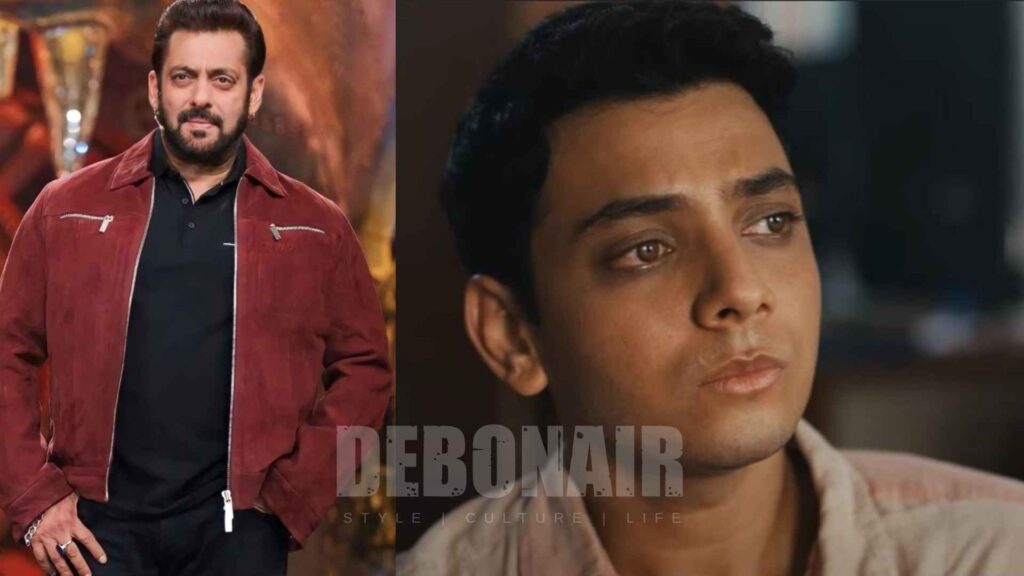
Because when you have sat in a room listening to Martin Scorsese talk about life, and when you have watched Salman Khan command a set without raising his voice, you realize something fundamental. Cinema is not about noise. It is about conviction. And conviction, once earned, changes everything.
Stay updated with the latest in fashion, lifestyle, and celebrity stories—straight from the world of Debonair. Follow us on Instagram, X (Twitter), Facebook, Youtube, and Linkedin for daily style and culture drops.

Sana has been covering film, fame, and everything in between for over a decade. From red carpets to rehab rumors, she brings nuance, wit, and an insider’s edge to every story. When she’s not reporting, she’s probably watching Koffee With Karan reruns or doom-scrolling celebrity IG feeds.