



Mumbai slows down in a very specific way right before Christmas. Not quiet, never quiet, but softer around the edges. You see it outside cinemas, people hanging back instead of rushing in, scrolling phones, debating plans that could still change. Someone says movie? Someone else says maybe. December has that effect. Everything feels undecided, and somehow that feels right. Into that moment walks Tu Meri Main Tera Main Tera Tu Meri, a title that sounds like something you mumble half-asleep, or repeat when you are trying to convince yourself of something tender.

A romantic film on December 25 should feel like a gift wrapped neatly for the box office. And yet, when booking numbers started circulating, the excitement did not spike. It hovered. Roughly 12,500 tickets were sold across the big national chains for opening day. PVR, INOX, Cinepolis. Not terrible. Not thrilling either. Advance collections stayed under the two crore mark, which is where the tone of the conversation quietly shifted. Less celebration, more recalibration. Words like slow and modest began to pop up, the kind of words that feel heavier than they sound in trade discussions.
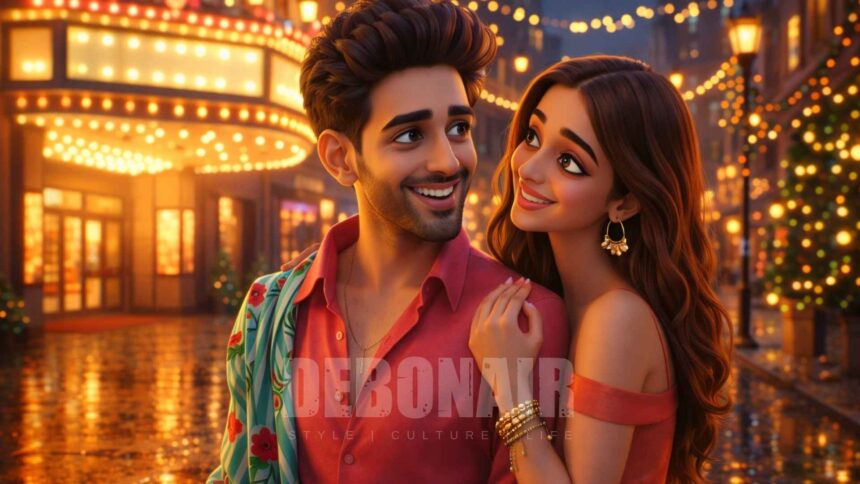
The faces on the poster are familiar. Kartik Aaryan, who has built an entire career out of feeling like someone you already know. The friend who talks too much, loves too hard, and somehow still gets the girl. Ananya Panday, all clean lines and city-girl ease, slipping comfortably into modern romance. Together, they promise something gentle. No fireworks promised. No chaos marketed. Just feeling.

And that might be exactly where things get complicated. This is not a loud film walking into theatres. It is not demanding attention. It is asking for it. Meanwhile, the holiday box office is already noisy. Dhurandhar is flexing its muscle. Avatar: Fire and Ash is doing what massive franchises do, swallowing screens and conversations whole. Against that backdrop, a rom-com has to rely on something less measurable than hype.
Still, the numbers do not tell the whole story. They never do. There have been odd little moments that do not fit the narrative neatly. Front-row seats are selling out at certain theatres. Front row, of all things. Seats people usually avoid unless everything else is gone. In some cases, those seats were priced higher than better ones, and people still bought them. That is not frenzy. That is the intent.
There was also a late flicker of movement. A noticeable jump in bookings in the last stretch before release. The kind of thing that happens when people stop planning and start feeling. Romantic films live in that space. They benefit from indecision. From last-minute texts. From evenings that begin without a plan and end in a theatre.

No one is pretending this is a massive opening waiting to happen. The language around the film has shifted toward patience. Toward legs. Toward word of mouth. Will people come out smiling? Will they tell someone else the next day that it was sweet, that it worked, that it felt nice? Those are not metrics you see on booking apps, but they matter.
Kartik Aaryan has lived through this before. His films tend to grow quietly, carried by connection rather than shock value. Ananya Panday’s audience often shows up when the mood feels right, not when the noise is loudest. Tu Meri Main Tera Main Tera Tu Meri seems built for that kind of slow burn, whether intentionally or not.
Christmas releases follow their own rules anyway. People are fuller, lazier, and more open. They are willing to give a film a little more time, a little more grace. If this one delivers even a slice of warmth, the early booking numbers may stop mattering sooner than expected.
Right now, the film is simply standing there, waiting for its first real audience. Not roaring. Not retreating. Just hoping someone chooses romance over spectacle for a couple of hours. In December, that choice is never as predictable as trade analysts want it to be.
Stay updated with the latest in fashion, lifestyle, and celebrity stories—straight from the world of Debonair. Follow us on Instagram, X (Twitter), Facebook, Youtube, and Linkedin for daily style and culture drops.

Zayn blends critical thinking with genuine fandom. Whether it’s decoding OTT series arcs or rating the latest Bollywood blockbuster, he writes with clarity, pop fluency, and a dash of irreverence.