



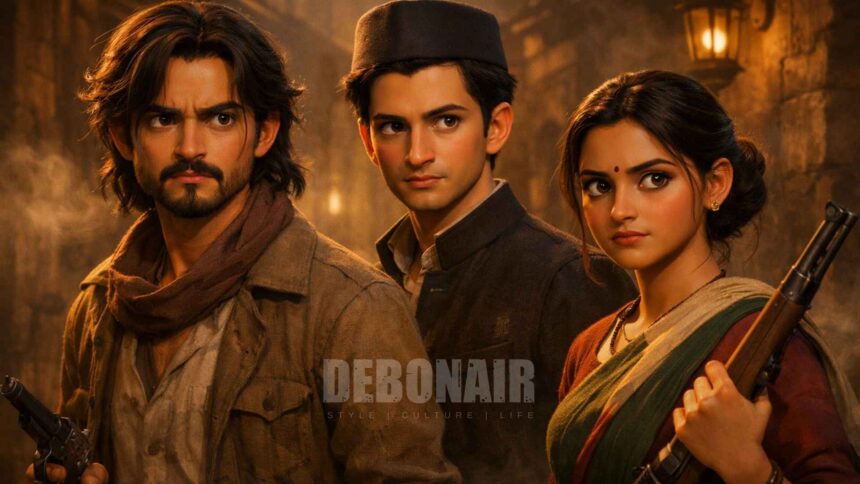
The room didn’t explode into applause when the teaser rolled out. It went quiet. Not polite quiet, not bored quiet, but that kind where people stop shifting in their seats and watch. You could feel it, something landing a little heavier than expected.
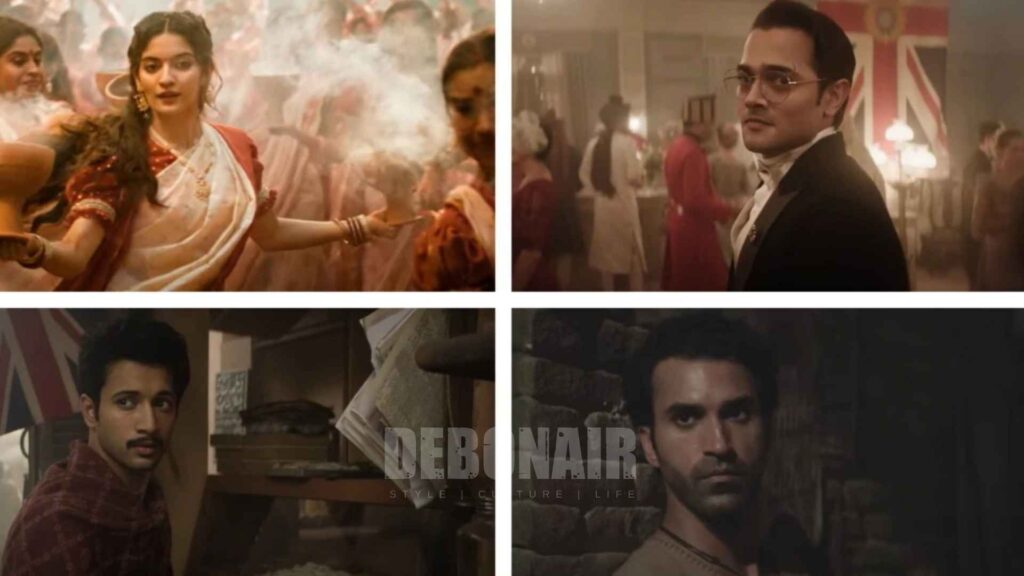
Because The Revolutionaries doesn’t arrive like a familiar story, it doesn’t hold your hand or ease you into a version of history you already know how to feel about. It drops you right into it, mid-breath, mid-tension.
The first thing that hits you is the mood. Not grand, not heroic in the way we’re used to seeing. It feels… unsettled, as if something is constantly about to happen. People move quickly, speak carefully, and even in the silence, there’s noise, if that makes sense. A kind of pressure is building.
We’ve grown up with a certain rhythm to stories about independence. There’s a cadence to them, a sense of moral clarity, of restraint. This doesn’t ignore that history; it looks elsewhere. The people who didn’t wait. Who weren’t interested in patience or persuasion.
And it doesn’t judge them either. That’s what surprised me.
Bhuvan Bam is probably the first face most people will lock onto, and it takes a second to adjust. Not because he looks unrecognizable, but because he feels different. There’s no hint of performance in the usual sense. He’s just there, in it, carrying this quiet intensity. You keep waiting for a moment of relief, something lighter, but it never comes. He doesn’t let it.
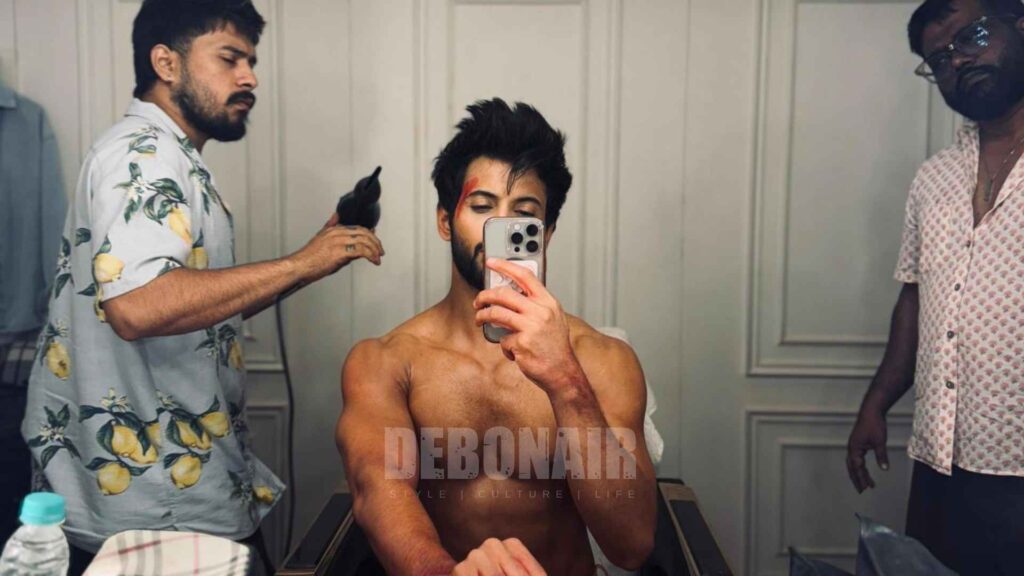
With Rohit Saraf, it’s almost like watching someone step out of a shadow they’ve been stuck in. There’s nothing soft here. He looks like someone who’s already made a decision and isn’t interested in explaining it to anyone. It’s a small shift on paper, but on screen, it changes everything about how you read him.
I didn’t expect to be pulled in by Pratibha Ranta the way I was, but there’s something very steady about her presence. Not loud, not overly dramatic, just certain. Like she knows exactly what’s at stake and isn’t wasting energy proving anything to anyone. You get the sense that without characters like hers, whatever this movement is wouldn’t hold together.
The world around them doesn’t feel staged. That’s the thing. It feels lived in. Messy in places. Claustrophobic at times. You don’t see sweeping speeches or dramatic declarations. You see planning, waiting, reacting. People are trying to stay one step ahead of something bigger than them.

Gurfateh Pirzada and Jason Shah add to that tension in different ways. One feels unpredictable, like he could tip the balance in any direction. The other feels controlled, almost too calm, which somehow makes him more threatening. It’s not exaggerated. It’s restrained in a way that works.
You can tell Nikkhil Advani isn’t interested in polishing this into something glossy. There’s a roughness to the way it’s put together, and it helps. It makes the stakes feel real. Nothing is overly explained, nothing is softened for comfort.
And knowing it’s drawn from Revolutionaries: The Other Story Of How India Won Its Freedom gives it a certain grounding, not in a heavy, textbook way, but in the sense that these aren’t just dramatic inventions. These are viewpoints that existed, actions that were taken, and consequences people lived with.
Even the locations don’t feel like backdrops. Amritsar, Varanasi, Mumbai. They carry weight without announcing themselves. You see them in fragments, in corners, in movement. Enough to feel the geography without it becoming the focus.
What stayed with me, oddly enough, wasn’t any of the action. It was the in-between moments. The pauses. A look that lingers a second too long. A hesitation before someone speaks. That sense that every decision has already cost something, even before anything actually happens.
It doesn’t try to convince you of anything. It just shows you a side of the story that’s usually kept a little out of frame.
No release date yet, just a promise of sometime this year. But it already feels like the kind of show that people will sit with, argue about, maybe even feel a little uncomfortable watching.
And honestly, that might be exactly what it’s meant to do.
Stay updated with the latest in fashion, lifestyle, and celebrity stories—straight from the world of Debonair. Follow us on Instagram, X (Twitter), Facebook, Youtube, and Linkedin for daily style and culture drops.

Zayn blends critical thinking with genuine fandom. Whether it’s decoding OTT series arcs or rating the latest Bollywood blockbuster, he writes with clarity, pop fluency, and a dash of irreverence.