




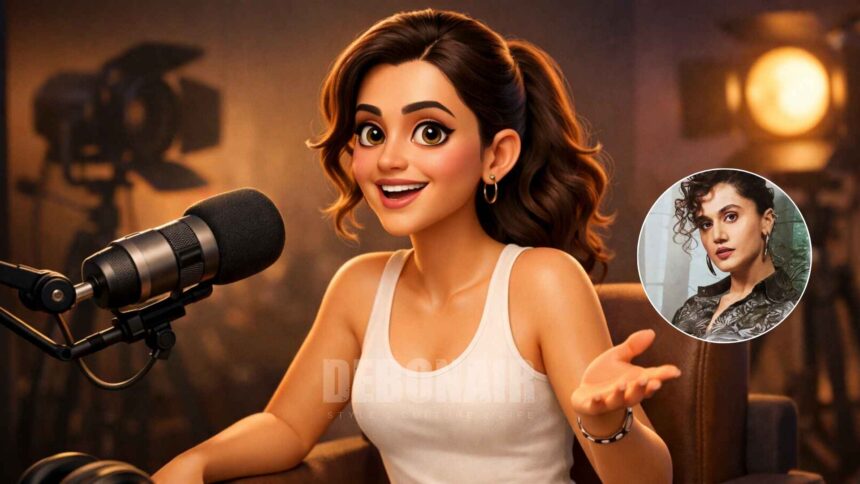
The clip opens with a laugh. Not the polished, red carpet kind. The real one. The kind that comes when someone has decided they are done protecting other people’s comfort.
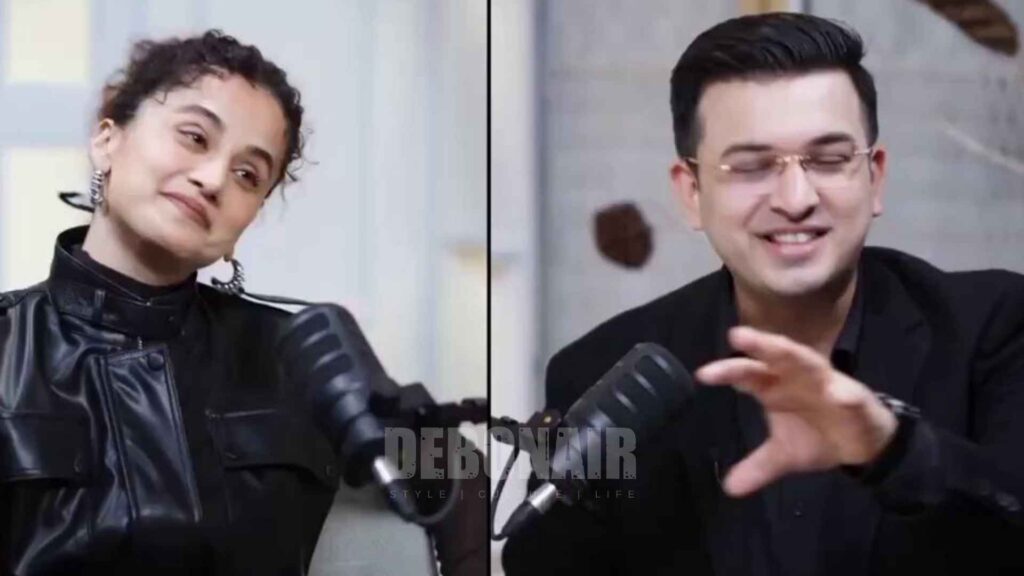
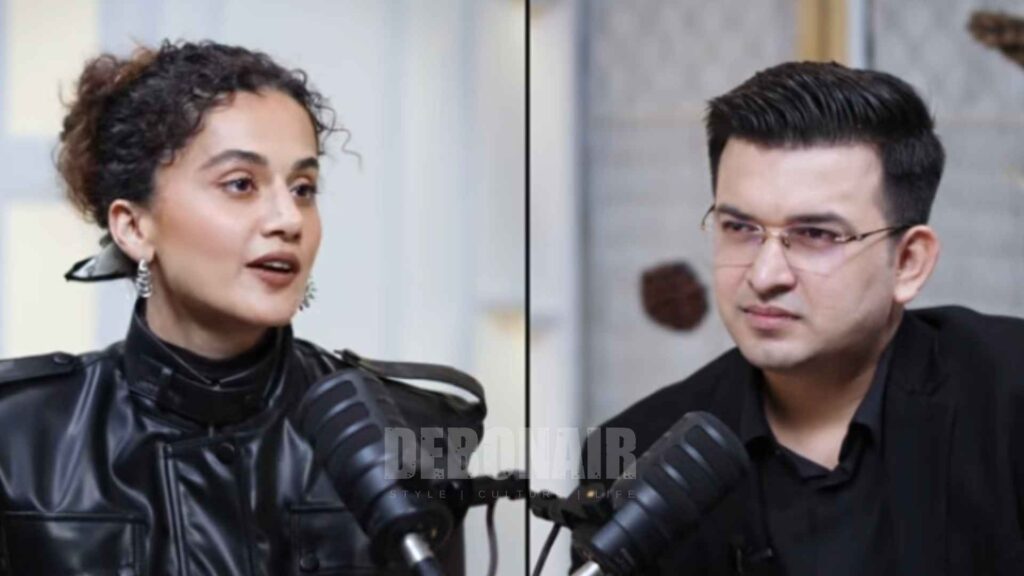
On February 24, 2026, Taapsee Pannu sat across from Shubhankar Mishra on his podcast Unplugged, and somewhere between the studio lights and the quiet hum of recording equipment, the conversation tilted. What began as a promotion for her latest film turned into something rawer. More personal. Almost surgical in its honesty.
She called it what it was. Body policing.
There is something about the way Taapsee speaks when she is not performing. Her voice does not tremble. It does not dramatize. It states. And that is what made the “padded bra” revelation hit harder than any viral headline could.
She described her early years in the South Indian film industry with a detail that felt painfully specific. Directors would insist that actresses wear padded bras to accentuate their appearance. But here is the part that lingered. They rarely told her directly. The instruction traveled like gossip through a corridor. Director to assistant director. Stylist assistant. Stylist to hairdresser. And finally, someone would awkwardly murmur it to her as if it were a wardrobe malfunction instead of a mandate.
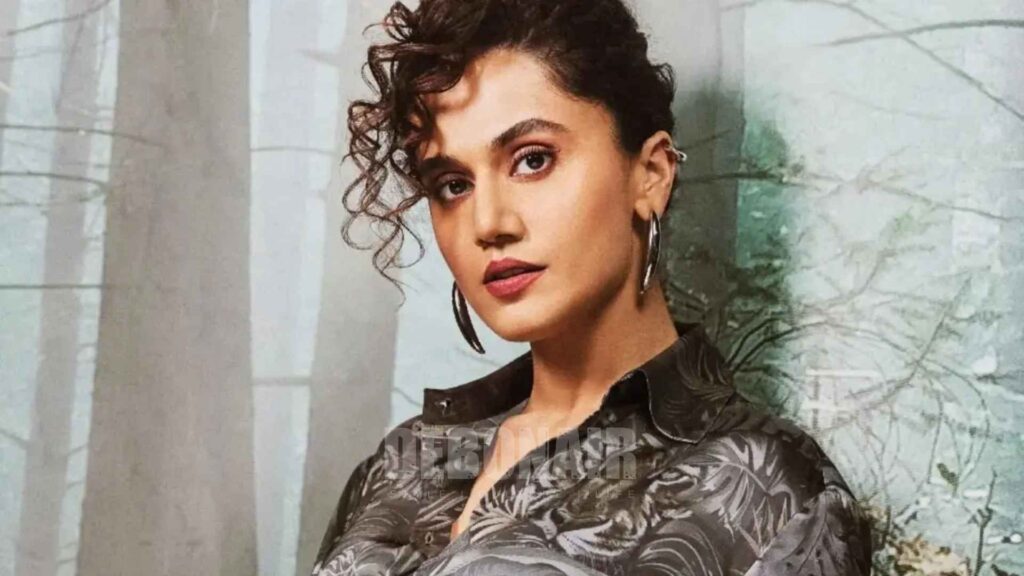
Honestly, it felt like watching someone recount a memory they had swallowed for years.
She spoke about being sent back to her vanity mid shoot. Changing. Returning. Standing under harsh lights while crew members discussed whether the “difference” was visible enough. Whether she needed to “fill it up” more. The language was casual. The humiliation was not.
Truth is, the film industry has always had a camera. What Taapsee exposed was the gaze behind it.
The conversation shifted, almost inevitably, to that long-standing trope in regional cinema. The navel shot. The slow pan. The rain-soaked song sequence. She did not dismiss it. She contextualized it. In many South Indian and Bhojpuri films, she said, the navel becomes the focal point of desire. In Hindi cinema, the gaze migrates. It climbs. It settles on cleavage instead.
Different geography. Same fixation.
And just like that, what many have defended as “aesthetic tradition” felt stripped down to something more transactional. Audience fantasy, she argued. Framing choices are made deliberately. Intentionally. Often, without considering the performer’s comfort.
There is a particular kind of silence that follows statements like that. The kind that spreads across social media before the noise kicks in.
Because noise did kick in. Within hours, clips from Unplugged were everywhere. Comment sections are fractured into two predictable camps. Many fans praised her for saying out loud what countless actresses have implied in interviews for decades. They called it brave. Necessary. Overdue.
Then came the backlash.
Some critics, particularly from the South Indian industry, accused her of double standards. Why speak now, they asked. Why not then? Why continue working in those films if the experience was so uncomfortable?
It is an old script. The one where speaking up must be perfectly timed, perfectly pure, or not spoken at all.
But context matters. Taapsee was on the podcast promoting Assi, her latest collaboration with director Anubhav Sinha. And the irony was not lost on anyone paying attention.
In Assi, she plays a lawyer fighting for a woman, portrayed by Kani Kusruti, who has survived sexual assault. The film is being described as a gritty courtroom drama. Substance over spectacle. Dialogue over dance numbers. A narrative centered on justice, not glamour.
There is something poetic about that contrast.
She spoke about how her career has evolved. How she moved from roles where her body was discussed in vanity vans to roles where her character’s moral spine drives the story. It was not framed as regret. It was framed as growth. As awareness. As choosing differently when the power to choose finally arrives.
And that is perhaps what unsettled some corners of the internet. The idea that an actress can acknowledge complicity in a system while also critiquing it. That she can admit she participated because she was building a career, because she was young, because options were limited, and still call the system flawed.
There is a myth that empowerment must look pristine. But real empowerment is messy. It comes with hindsight.
Watching the clip, you notice how composed she remains. No theatrics. No righteous anger. Just clarity. She even laughs at moments, the kind of laugh that carries disbelief more than amusement.
It is easy to romanticize cinema. The songs. The slow-motion entrances. The choreography feels like a collective celebration. What Taapsee did on that podcast was pull back the velvet curtain and show the negotiation underneath. The bargaining of inches. The scrutiny of silhouettes. The quiet trade between ambition and autonomy.
And maybe that is why it went viral. Not because it was shocking. But because it felt familiar.
Every industry has its version of the padded bra conversation. The subtle suggestion. The “adjustment.” The expectation is packaged as an opportunity. What made this different was that it was named, publicly, without euphemism.
As Assi gears up for release, the spotlight is already brighter. The film’s subject matter intersects uncomfortably with her revelations. One story about legal justice on screen. One story about personal boundaries behind it.
There is something about timing that we only understand in retrospect. Maybe Taapsee could not have said this ten years ago. Maybe she would not have been heard. Maybe she would have been quietly replaced.
But on February 24, 2026, she said it. On record. Into a microphone. In a room that felt ordinary until it wasn’t.
And the industry, whether defensive or reflective, is now forced to sit with it.
Stay updated with the latest in fashion, lifestyle, and celebrity stories—straight from the world of Debonair. Follow us on Instagram, X (Twitter), Facebook, Youtube, and Linkedin for daily style and culture drops

Zayn blends critical thinking with genuine fandom. Whether it’s decoding OTT series arcs or rating the latest Bollywood blockbuster, he writes with clarity, pop fluency, and a dash of irreverence.