




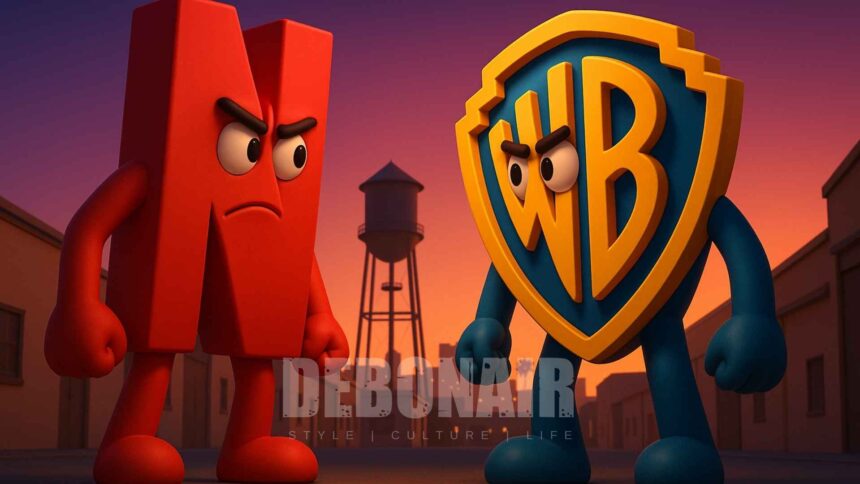
The night the Netflix and Warner Bros story broke, the city fell off. Not dramatic, just unsettled in that way Los Angeles sometimes gets when the news is too big for the billboards to keep pretending everything is normal. I was driving down Olive, passing the old water tower, and suddenly everyone around me seemed to be checking their phones at the same second. That weird hive-mind moment. And there it was. Eighty-two point seven billion dollars. Enough money to make even the jaded crowd blink twice.
People reacted in completely different ways. Some were almost impressed, like watching someone lift a car with one hand. Netflix, of all companies, is swallowing a studio that basically raised half the industry. Others looked genuinely spooked. Warner Bros isn’t just a business; it’s wallpaper in the culture. It’s muscle memory. And seeing it shuffled into someone else’s deck felt strange, like walking into your living room and noticing a window is missing.
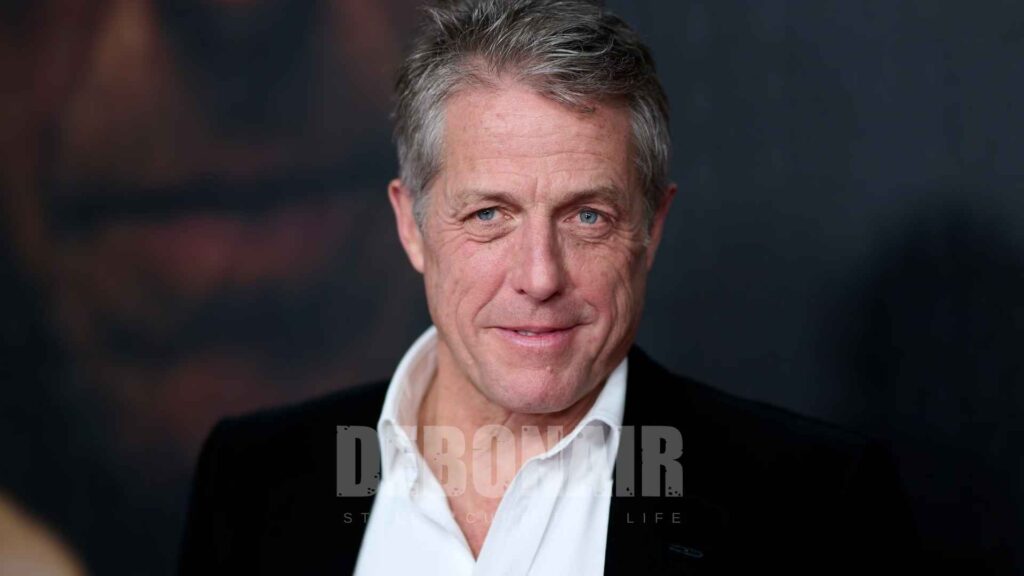
Hugh Grant’s little comment didn’t help the nerves either. Bad news, he said, and the simplicity of it cut through all the corporate optimism floating around. He didn’t yell. He didn’t rant. He sounded like someone who’s been around long enough to know when something big feels slightly wrong.
Then came the politicians. They always show up eventually, but this time it felt like they were saying what a lot of people here were already whispering. Warren, Jayapal, a few others, all pointing to the same worry: fewer choices, less competition, higher prices, creativity getting squeezed till it forgets how to breathe. And honestly, you don’t need a policy degree to see their point. We’ve watched enough tech consolidations to know how these stories tend to end.
The unions were even quicker. Writers, directors, crew members, the people who actually make Hollywood run, started sounding alarms immediately. They’ve been burned before. Layoffs hide inside deals like this. Shrinking budgets, vanishing release slates, whole departments quietly folded into spreadsheets. Everyone claims it’s good for innovation, but that usually translates to, We’re cutting the weird stuff first.
Netflix tried to reassure everyone by saying theaters weren’t going away. Some movies would still hit the big screen. But the word some lingered like a half-truth. Theaters already feel like an endangered ritual. Even the sticky floors and old carpets feel endangered. It’s not the existence of films people are afraid of losing; it’s the scale, the ambition, the risk. The things companies can’t measure with data.
Meanwhile, the finance people started poking at the numbers, and the number that got the most winces was the debt load. Analysts kept asking versions of the same question can Netflix actually carry this weight? Buying a studio is not the same as buying infrastructure. Culture doesn’t obey charts. It needs room to breathe. You can’t box it up and expect it to perform on schedule.
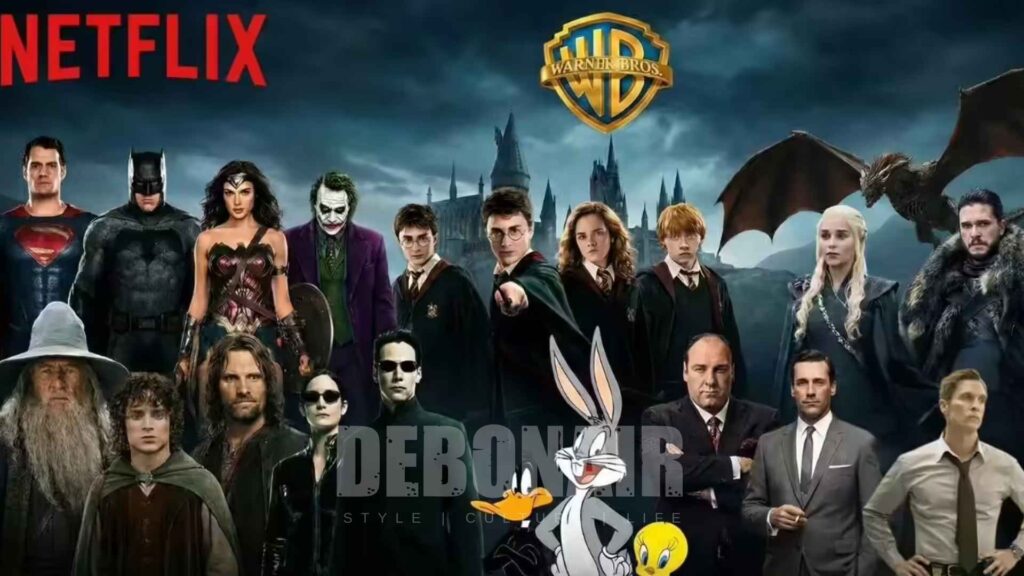
And Warner Bros., that name is carved into the walls of this town. Looney Tunes absurdity, those smoky old noir films, the wizarding world’s early thrill, the endless DC reboots, all of it. It’s a messy legacy, but it’s a real one. People grew up with that shield logo. Watching it get tucked under a streaming banner makes the ground feel a little unsteady.
Now everything is stuck in the waiting stage. Regulators are combing through documents. Executives pretending not to worry. Assistants are hitting refresh on their phones way too often. And somewhere inside both companies, someone is already drafting the internal announcement emails, the ones they won’t be allowed to send for months.
But here’s the thing I can’t shake. Hollywood has survived so many eras of panic. The streaming revolution. The death of DVDs. The strikes. The pandemic that shut down the entire machine. And still, every morning, someone shows up ready to build something new. A story, a shot, a character that didn’t exist yesterday. That instinct doesn’t vanish because of a merger.
Maybe this deal ends up reshaping the industry. It probably will, one way or another. Maybe budgets change, maybe release patterns drift, maybe a new wave of independent creators rises up because the big studios feel too crowded. Whatever happens, the creative pulse won’t shut off. It never does.
Right now feels like the quiet right before a stage light comes on. Everyone is looking at the curtain, not sure what’s behind it, but knowing something is about to shift. And if you’ve been in this town long enough, you know that feeling isn’t a warning. It’s just Hollywood being Hollywood. Messy, unpredictable, always on the verge of rewriting itself.
Stay updated with the latest in fashion, lifestyle, and celebrity stories—straight from the world of Debonair. Follow us on Instagram, X (Twitter), Facebook, Youtube, and Linkedin for daily style and culture drops

Zayn blends critical thinking with genuine fandom. Whether it’s decoding OTT series arcs or rating the latest Bollywood blockbuster, he writes with clarity, pop fluency, and a dash of irreverence.