



The first thing you feel in Ikkis is silence. Not the peaceful kind, but the heavy, expectant hush that settles right before something irreversible. A tank idles in the Punjab cold, breath fogs the night air, and somewhere between memory and history, a 21-year-old boy decides who he will be forever.
Directed by Sriram Raghavan, Ikkis arrived in theatres on January 1, 2026, with very little noise and an almost reverent sense of restraint. No chest-thumping patriotism, no slow-motion heroics engineered for applause. Instead, a film that walks quietly into grief, courage, and consequence, and stays there long enough for it to hurt.
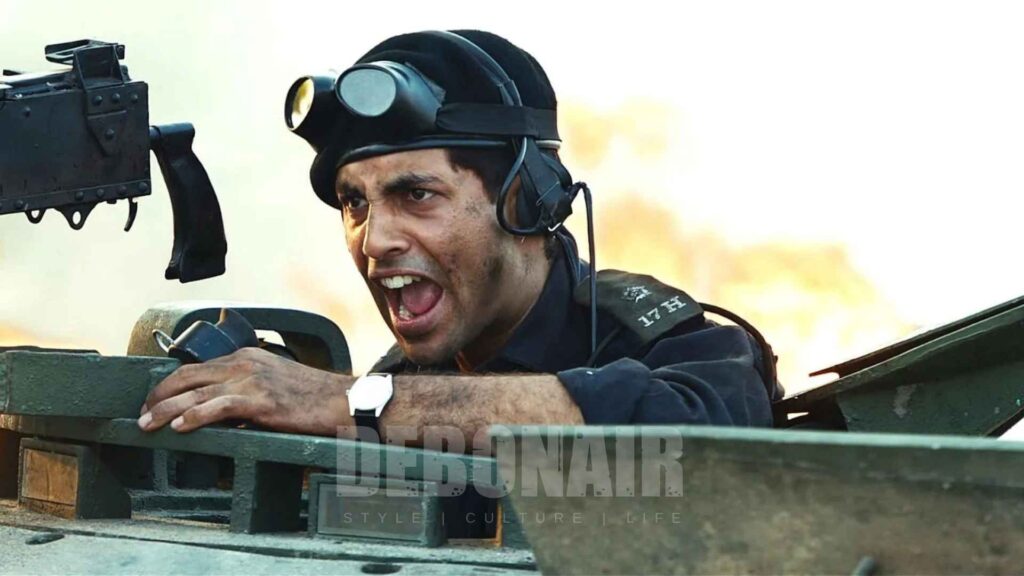
At its centre is Agastya Nanda, stepping into the role of Second Lieutenant Arun Khetarpal, the youngest recipient of the Param Vir Chakra, martyred during the Battle of Basantar in 1971. Agastya does not play Arun as a legend in waiting. He plays him as a boy still learning how to stand inside his uniform. His eyes are innocent, uncertainty in his posture, and a slow, believable shift as war strips him down to instinct and duty. It is a debut that never begs for validation. It simply earns it.
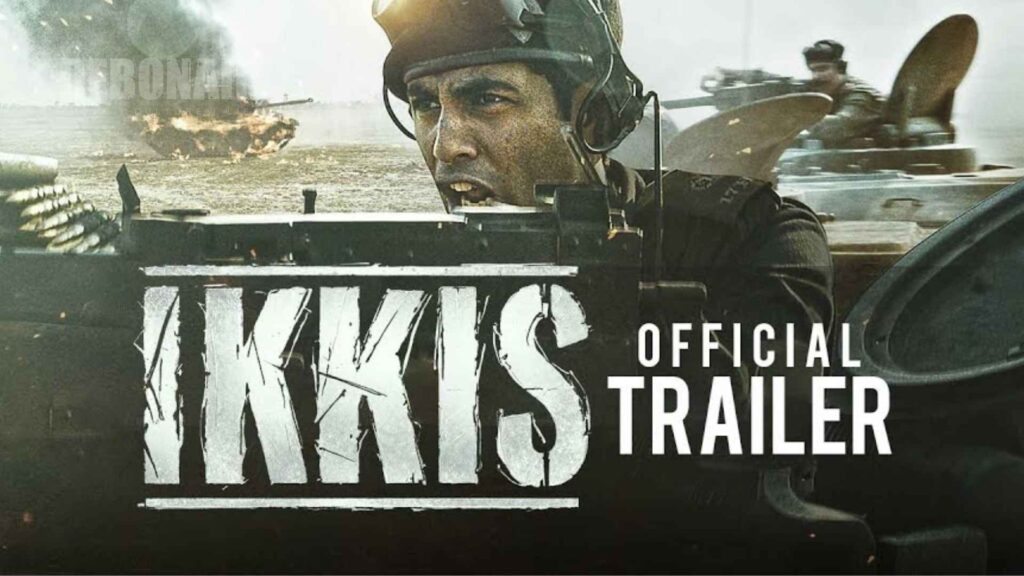
But truth is, the soul of Ikkis belongs elsewhere.
This is Dharmendra’s farewell. And it lands like a held breath finally released.
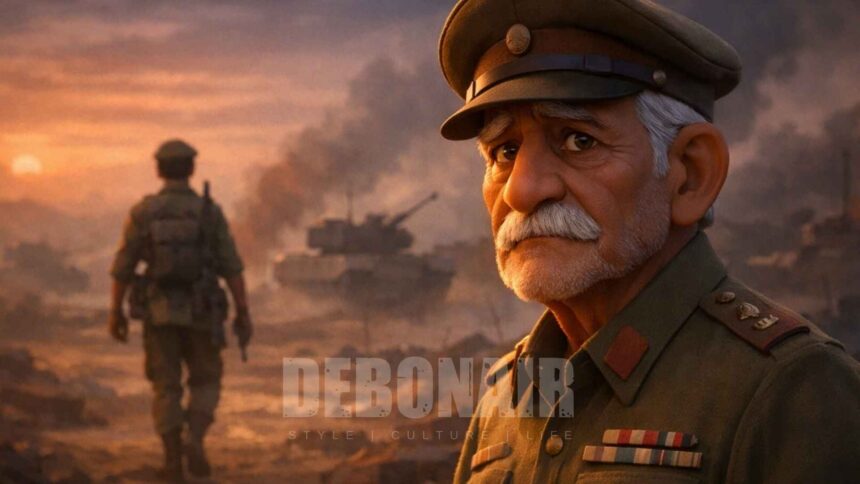
As Brigadier M.L. Khetarpal, Arun’s father, Dharmendra barely raises his voice. He does not deliver speeches. He listens, watches, and absorbs. His grief is quiet, almost ceremonial. A father who understands the cost of duty long before it demands its payment. Social media reactions on X have been unanimous in this one truth. This performance hurts because it refuses to perform grief. It simply exists inside it.
One widely shared reaction called it a silent, dignified heartbreak. Another described it as the emotional anchor that holds the entire film together. Watching Dharmendra here feels less like witnessing acting and more like being allowed into something deeply private. A man saying goodbye twice, once as a father on screen, and once as an icon stepping away from cinema.
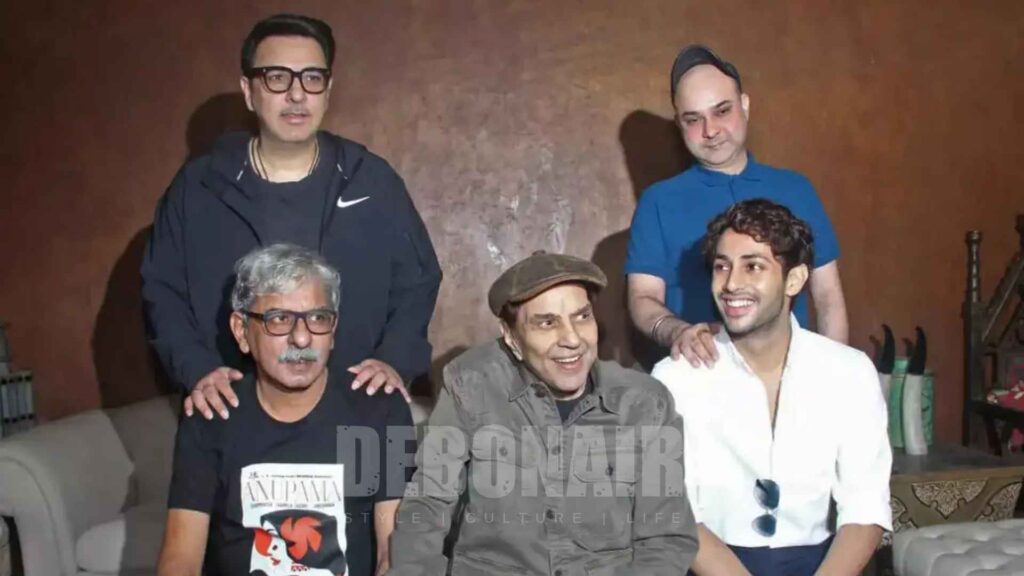
And just like that, Ikkis becomes more than a war film. It becomes a meditation on what remains after war is done.
The second half tightens its grip without warning. The Battle of Basantar unfolds not as a spectacle but as claustrophobia. Tanks feel enormous and suffocating. Time stretches, contracts, disappears. The final 30 minutes, widely praised online, are adrenaline-pumping without being triumphant. Every tactical victory is shadowed by inevitability. Every moment of bravery feels borrowed.
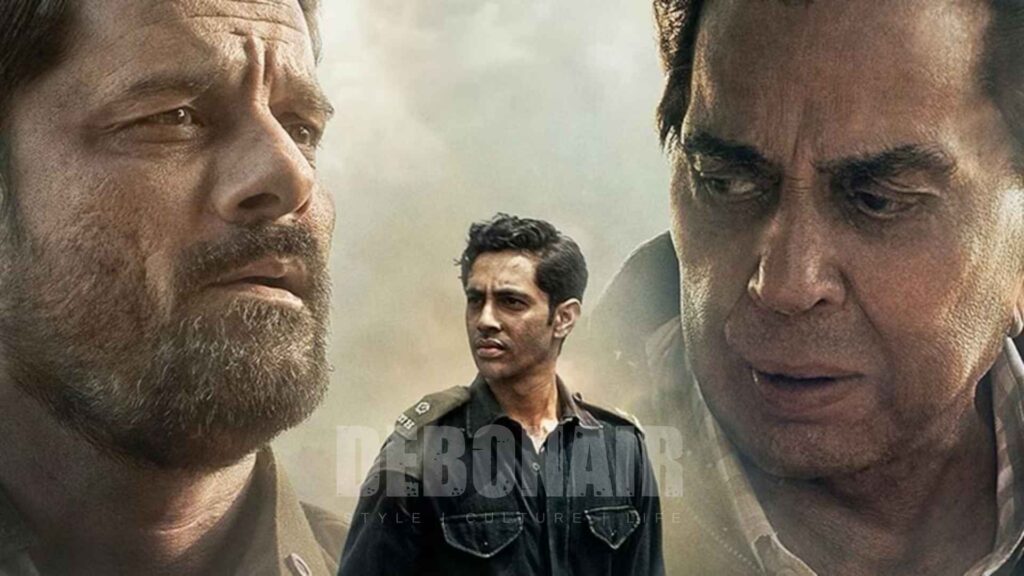
Opposite Agastya stands Jaideep Ahlawat, playing Pakistani Brigadier Khwaja Mohammed Naseer with surprising restraint. There is no caricature here. No villain monologues. Just a soldier on the other side of a line drawn by history. Critics and viewers alike have called this performance outstanding, and rightly so. The film’s refusal to flatten its adversary into an idea is part of what gives it moral weight.
There’s something about the way Ikkis frames war that feels quietly radical. The film is openly anti-war, not through speeches, but through the aftermath. One of its most affecting sequences unfolds far from the battlefield, when Brigadier Khetarpal visits Lahore at the invitation of the very officer who faced his son. It is a moment soaked in memory. Pre-partition homes, old friendships, shared languages that outlived borders. The sequence lingers on what was lost long before a single shot was fired.
Audiences have responded to this choice deeply. On X, viewers wrote about how the film explores love, duty, and grief beyond uniforms and flags. Others noted that it decisively shifts the template of Indian war cinema away from glory and toward humanity. Even critics who found the first half measured or the romantic track distracting agreed on one thing. By the time the film reaches its final moments, it has earned its emotional authority.
The industry felt it too.
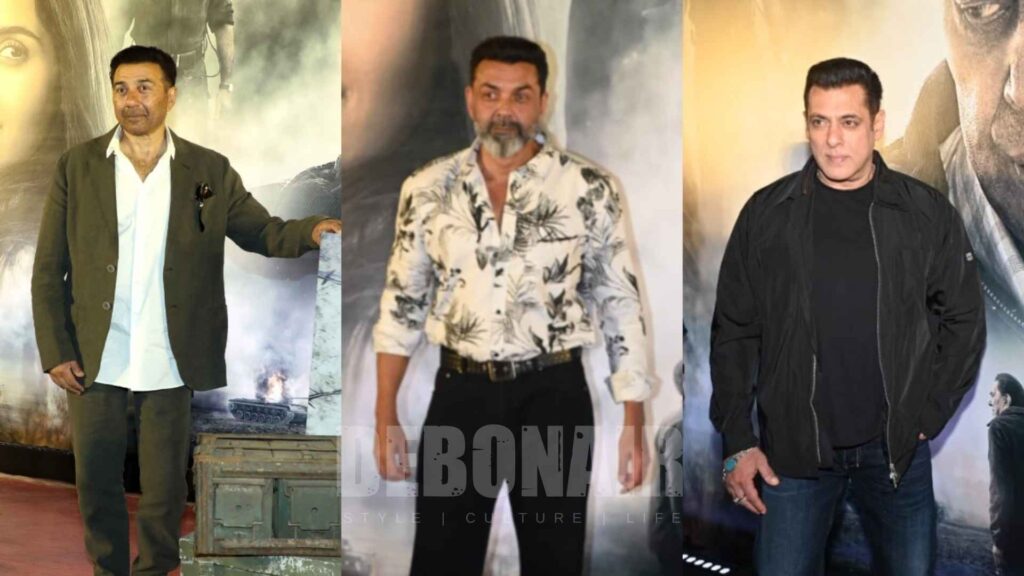
At the special screening in late December, the room reportedly fell apart when Salman Khan paused before Dharmendra’s poster, tears visible, voice heavy as he spoke about losing the He-Man of Hindi cinema. Sunny Deol and Bobby Deol sat in silence, visibly moved. It was less a premiere and more a vigil.
Critically, Ikkis has landed between 3.5 and 4.5 stars across publications, with most agreeing that its emotional impact far outweighs its structural imperfections. Box office expectations are modest, around Rs 2 crore opening, but that feels almost beside the point. This was never meant to be a loud success.
Honestly, it feels like a parting gift.
As Fatima Sana Shaikh wrote online, it deeply moves you, like something precious handed over gently before the lights go out. A film about a 21-year-old who became immortal, and an 88-year-old legend choosing to leave quietly, with dignity intact.
Ikkis does not ask to be celebrated. It asks to be remembered. And once you’ve sat with it, once you’ve felt that opening silence and the weight it carries, you realise it already will be.
Stay updated with the latest in fashion, lifestyle, and celebrity stories—straight from the world of Debonair. Follow us on Instagram, X (Twitter), Facebook, Youtube, and Linkedin for daily style and culture drops.

Zayn blends critical thinking with genuine fandom. Whether it’s decoding OTT series arcs or rating the latest Bollywood blockbuster, he writes with clarity, pop fluency, and a dash of irreverence.