




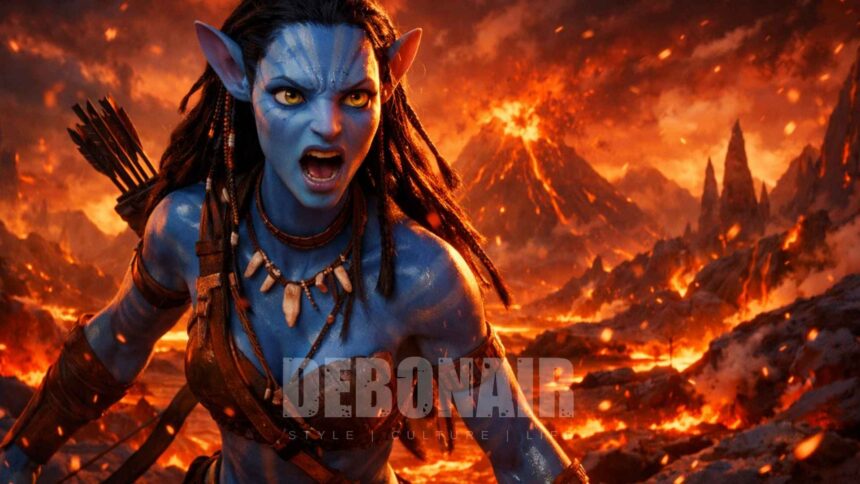
The first thing that got me wasn’t the story. It wasn’t even the scale. It was the color, thick and restless, like heat trapped under glass. AVATAR: FIRE AND ASH opens the way some places feel at dusk, when the air hasn’t decided whether it wants to cool down or boil over. Pandora doesn’t welcome you back. It just keeps moving, indifferent to whether you’re ready.
By now, we all know the drill. James Cameron doesn’t make sequels so much as he reopens worlds and dares you to remember how big they are. This third chapter is less about discovery and more about endurance. The wonder is still there, sure, but it’s bruised. The beauty has edges. Fire and ash are not poetic concepts here. They hang in the air. They cling. They don’t leave quietly.
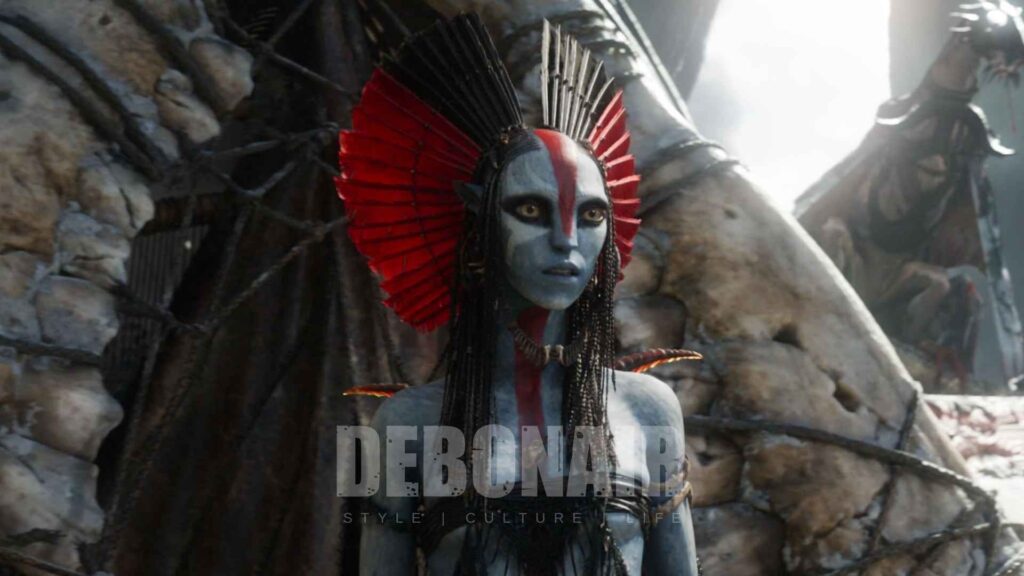
A lot of early reviews have circled the same idea. The Hollywood Reporter India put it plainly, calling the film visually ravishing but familiar, a return to a world that no longer surprises. That sentence has been doing the rounds for a reason. It’s accurate. Pandora isn’t a reveal anymore. It’s a place with history, and history is messy.
That familiarity doesn’t make the film small. If anything, it makes it heavier. The landscapes feel altered, less postcard-perfect, more lived in. Ash drifts through scenes the way memory does, uninvited and impossible to sweep away. Cameron still commands scale better than almost anyone alive, but he seems less interested in showing off this time. FIRE AND ASH feels controlled, almost stern. Like a filmmaker who knows exactly what he has and doesn’t feel the need to explain it.

At the center is Zoe Saldaña, doing work that feels rawer than anything she’s done in this franchise before. Neytiri is no longer just ferocity and grace. She’s carrying loss in her posture, anger in the way she moves through space. Saldaña told Entertainment Weekly it was hard to be in her skin this time, and that struggle shows. This is not a performance polished for applause. It’s abrasive in places. Uncomfortable. It feels earned.
Stephen Lang returns as Quaritch with the kind of physical presence that doesn’t soften with time. He’s talked openly about the brutal training behind the film’s combat sequences, and you can tell. There’s weight in the way he inhabits the character, a stubbornness that keeps him from sliding into caricature. Quaritch doesn’t feel like a villain designed to be defeated. He feels like a problem that keeps coming back.
Not everyone is impressed. Some early reactions have been blunt about their disappointment, calling the film hype heavy and light on real invention. One Southeast Asian review asked whether FIRE AND ASH brings actual heat or just noise. The numbers have followed. The film opened with the lowest Rotten Tomatoes score of the Avatar series so far, a statistic that has become its own talking point online.

But Avatar has always existed slightly outside that conversation.
Box office projections point toward a massive opening, somewhere north of $340 million globally, possibly more. China’s pre-sales are solid, if not explosive. In India, the anticipation is tangible. The film opens nationwide on December 19, 2025, across multiple languages, and bookings are already shifting the landscape. Trade reports note other releases starting to wobble under its shadow, including Dhurandhar, which has seen its first real dips as Avatar approaches.
India has been notably receptive. The Central Board of Film Certification cleared the film without any cuts, awarding it a U/A certificate, a small detail that says a lot about how the film’s intensity is being received. Filmmaker S S Rajamouli also shared his reaction after seeing the film, describing the experience with childlike excitement. Coming from someone who understands spectacle at scale, that reaction carries weight.
There have been quieter, more human moments around the release, too. The Australian premiere was canceled out of respect following a tragic local event, a reminder that no matter how massive a film is, the world outside the theater still intrudes. The soundtrack is already out digitally, with vinyl planned for early 2026, a slow burn of a release that feels fitting for a franchise built on patience and long horizons.
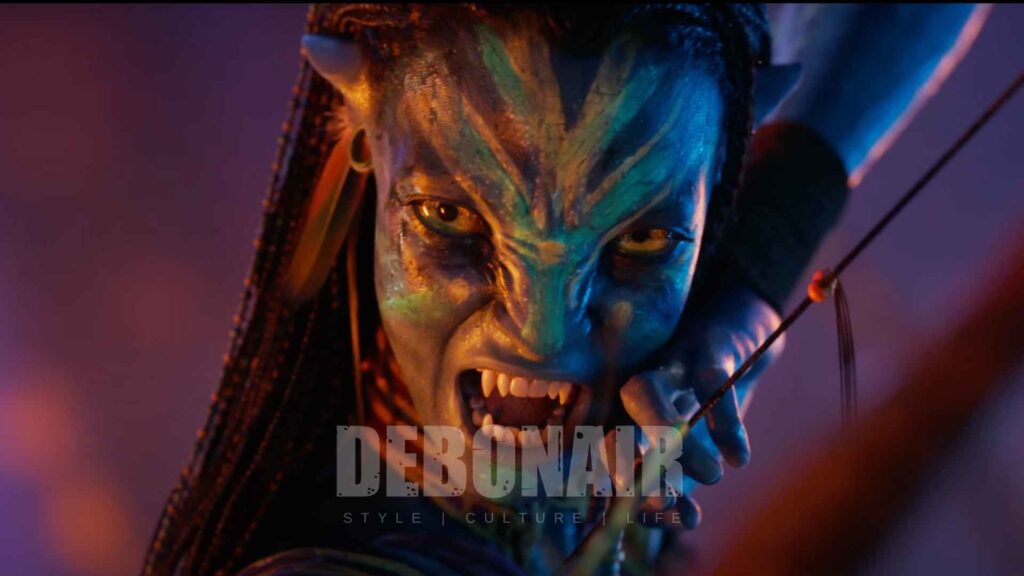
What FIRE AND ASH really feels like is a film made by someone no longer chasing novelty. Cameron isn’t trying to shock you with Pandora. He assumes you’re already invested. What he’s asking now is whether you’re willing to sit with consequence. With a world that’s beautiful but not gentle. With characters who don’t get to reset just because another chapter begins.
The film isn’t light. At times, it feels burdened by the weight of its own mythology, by the sense that it’s positioning pieces for what comes next. But there’s honesty in that. Cameron isn’t pretending this is a neat, self-contained experience. He’s building something long and deliberate, and FIRE AND ASH is a chapter that burns more than it dazzles.
When the lights come up, the feeling isn’t exhilaration. It’s something quieter. The images stay with you, but so does the mood. Fire fades quickly. Ash doesn’t. It settles into corners, into memory, into whatever comes after.
Whether audiences embrace that shift or resist it is still unfolding. But one thing remains stubbornly true. Betting against James Cameron, especially when the spectacle looks this assured, has never been a great idea.
Stay updated with the latest in fashion, lifestyle, and celebrity stories—straight from the world of Debonair. Follow us on Instagram, X (Twitter), Facebook, Youtube, and Linkedin for daily style and culture drops.

Zayn blends critical thinking with genuine fandom. Whether it’s decoding OTT series arcs or rating the latest Bollywood blockbuster, he writes with clarity, pop fluency, and a dash of irreverence.