





It started with a single word.
Not a grand speech. Not a dramatic pause engineered for virality. Just a warm, grounded, almost intimate “Namaskar” floating through the Royal Festival Hall in London on a February evening that already felt heavy with expectation.
And somehow, that was enough.
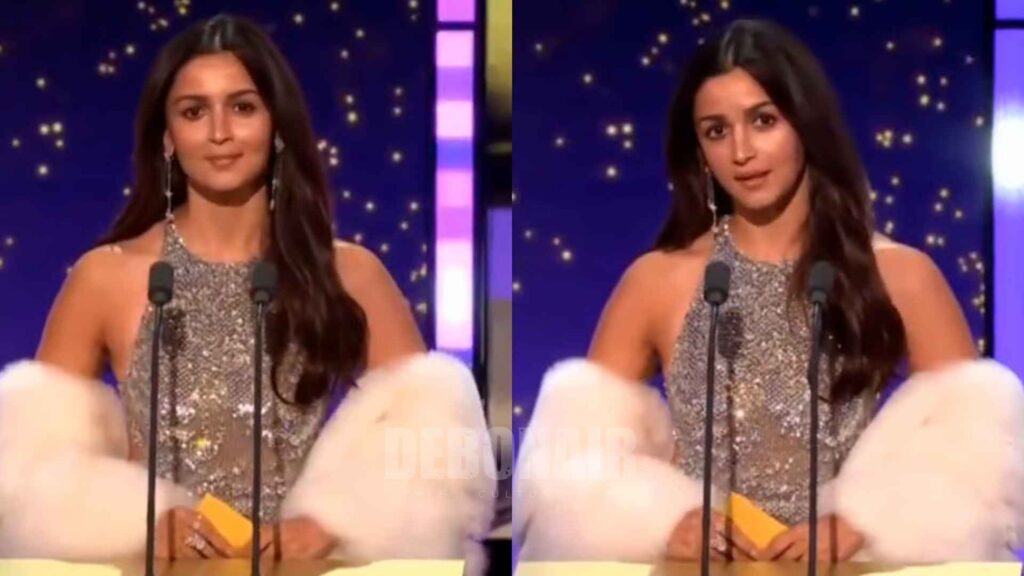
The 79th British Academy Film Awards are always polished within an inch of their lives. The velvet seats, the carefully timed applause, the sort of elegance that feels rehearsed even when it is not. But when Alia Bhatt walked onto that stage on Sunday, February 22, there was something unpolished in the best way about her presence. She did not seem overawed. She did not look like she was trying to prove she belonged. She just… did.
“Agla award ek aisi film ke liye hai, jo angrezi mein nahi hai,” she said, clear and steady. For a split second, you could feel the room adjusting, leaning in, recalibrating. Then came the grin. “Don’t reach for the subtitles just yet.”
It was playful. But it was also pointed.
Because here is the truth. For decades, Indian actors have stepped onto global platforms carefully, often cushioning their identity to fit the room. Alia did not cushion anything. She opened in Hindi. She let it sit there. She trusted that cinema, as she said, is a language we all speak fluently.
There is something quietly radical about that.
The clip spread overnight. You could almost track it moving across time zones. By morning in India, it was everywhere. Group chats. Fan pages. Reaction videos. The kind of pride that feels personal, even if you have never met the person on screen.
Samantha Ruth Prabhu was one of the first to publicly cheer. She reposted the moment to her Instagram Stories with a white heart, tagging Alia like a proud friend watching from afar. No long caption. No dramatic speech. Just support. And if you have followed their dynamic over the years, it felt genuine. Samantha once called her a tigress during the release of Jigra in 2024. That word has resurfaced now, and not in a cheesy way. There is something fierce about walking into a global ceremony and speaking your language without hesitation.
But let us talk about the visual, because BAFTA is as much about what you say as what you wear while saying it.
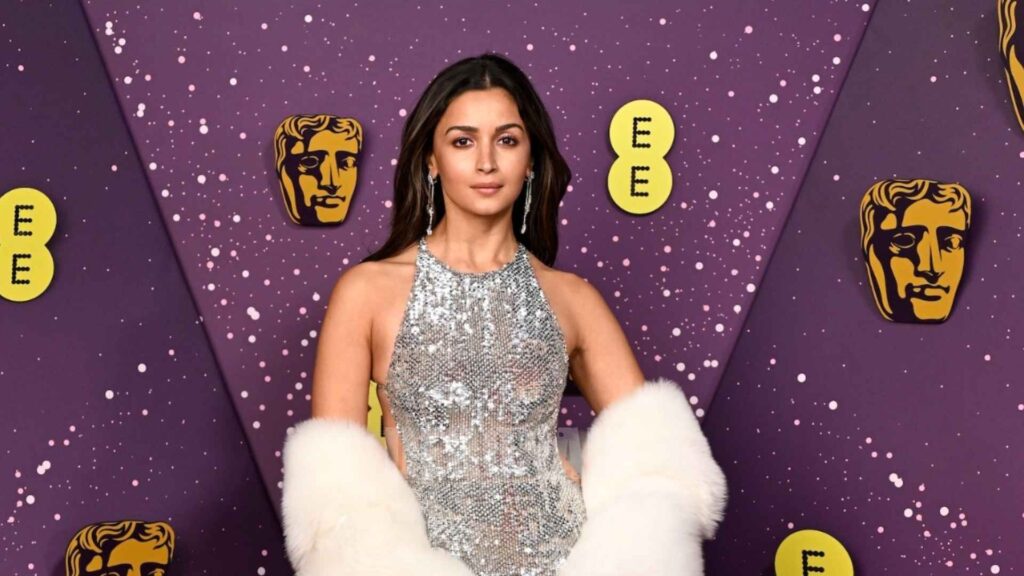
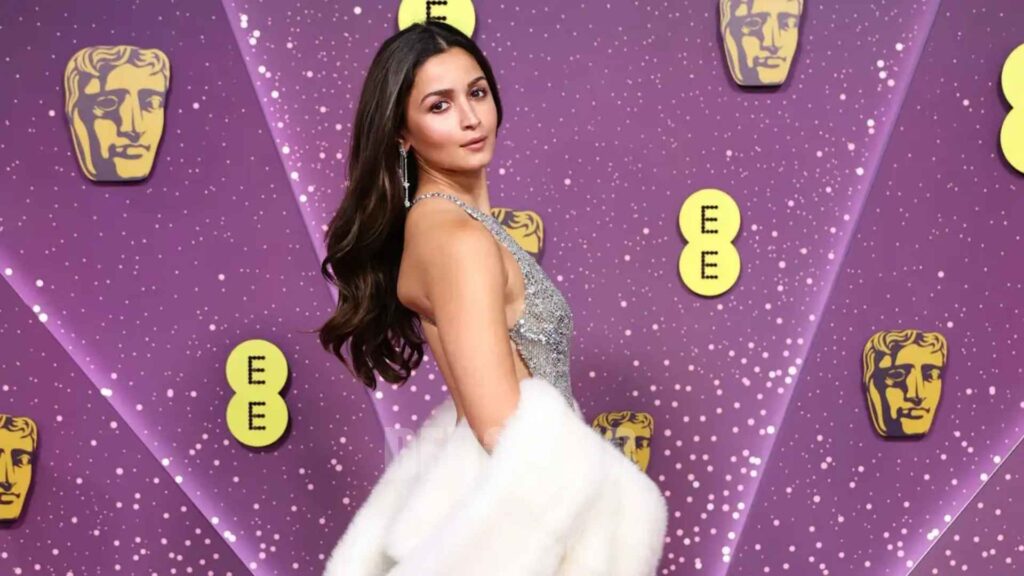
Alia chose a custom silver sequinned Gucci gown that caught the light like it was alive. Every movement sent a shimmer through the fabric, subtle but impossible to ignore. Draped over her shoulders was a white fur stole that felt almost cinematic, like something lifted from an old black-and-white photograph.
She told British Vogue that she was channeling Marilyn Monroe and Rekha. At first, that pairing sounds ambitious. Monroe is all breathy glamour and flashbulbs. Rekha is restraint, mystery, the kind of beauty that does not chase attention but commands it. And yet, standing there under the lights, the blend worked. There was old Hollywood softness in the silhouette, but the composure, the way she held herself, felt deeply rooted in Indian screen royalty.
It did not look like a costume. It looked like a conversation between two eras, two industries, two worlds.
On the red carpet, she shifted gears. When she mentioned her three-year-old daughter Raha, her voice warmed. She laughed about how Raha had started dancing to her songs. It was such a normal, domestic detail in the middle of all that spectacle. And maybe that is what made it land. Stardom can feel distant. Motherhood does not.

In that moment, she was not a global ambassador for Indian cinema. She was a woman amused that her child is slowly discovering who her mother is. The contrast made everything else feel more grounded.
The ceremony itself had its own share of headlines. Boong, produced by Farhan Akhtar and directed by Lakshmipriya Devi, won Best Children’s and Family Film. A significant win, even if it did not dominate the global chatter. Representation rarely arrives in just one form. Sometimes it is a sweeping speech. Sometimes it is a quiet trophy held backstage.
The award Alia presented went to the Norwegian drama Sentimental Value by Joachim Trier. Later in the night, One Battle After Another, starring Leonardo DiCaprio, swept up Best Film and Best Director. The applause for that was thunderous, the kind that rattles through your chest.
And yet, if you ask many viewers what they will remember from BAFTA 2026, it might not be the biggest winner. It might be that opening greeting.
Because language carries memory. It carries childhood, films watched with family, dialogues mouthed in front of mirrors. Hearing Hindi spoken so confidently at one of the world’s most prestigious award ceremonies did not feel like a token nod. It felt like an arrival.
Indian cinema has not been waiting quietly in the wings. It has been expanding, experimenting, traveling through festivals and streaming platforms, and international collaborations. But moments like this crystallize that journey. They make it visible.
And here is the thing no one says out loud. Global validation still matters. Not because it defines worth, but because it signals inclusion. When Alia stood on that stage and began with Namaskar, she was not asking to be understood. She was assuming she would be.
That shift is everything.
By the time the ceremony ended and London’s cold air rushed back in as guests stepped outside, the clip had already started its second life online. Fans dissected her gown. They replayed her smile. They translated the line for friends who did not speak Hindi. Pride moved quietly but steadily across screens.
It was not loud. It was not overproduced. It was a woman greeting the world in her own language.
Sometimes that is all it takes.
Stay updated with the latest in fashion, lifestyle, and celebrity stories—straight from the world of Debonair. Follow us on Instagram, X (Twitter), Facebook, Youtube, and Linkedin for daily style and culture drops

Zayn blends critical thinking with genuine fandom. Whether it’s decoding OTT series arcs or rating the latest Bollywood blockbuster, he writes with clarity, pop fluency, and a dash of irreverence.