





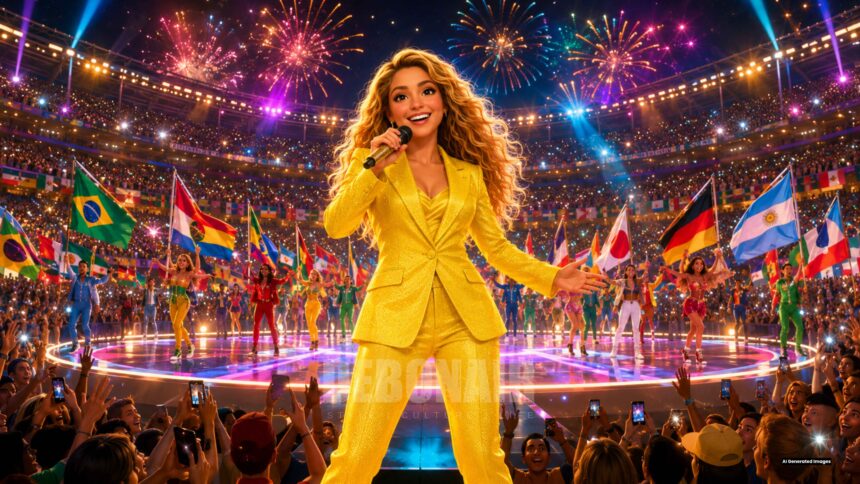
Sixteen Years Is a Long Time to Make an Entrance.
Nobody tells you how much weight a stadium holds until you’re inside one waiting for Shakira. Azteca was like that on Thursday night. Eighty thousand people, maybe more, crammed into those old concrete tiers, and the whole place had this low hum to it, not noise exactly, more like collective anticipation turning into its own kind of pressure. Mexico City does atmosphere better than almost anywhere. Add a World Cup opening ceremony to that, her name already bouncing off every concrete wall before she touched the stage, and you get something that goes past excitement into something harder to name.

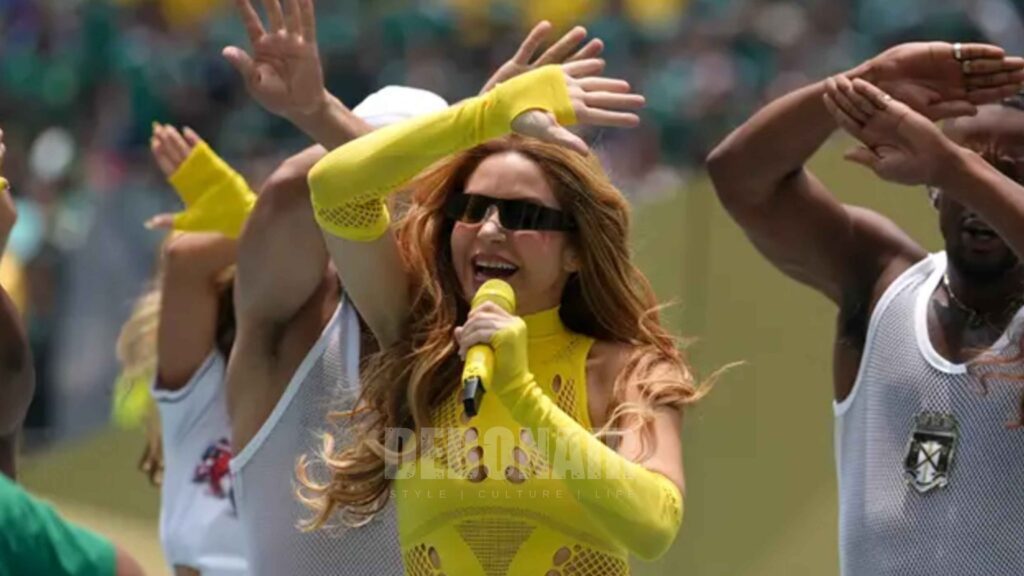
Then the lights changed. Neon yellow. Sunglasses. Shakira.
Here’s the thing about 2010 that people forget: nobody predicted “Waka Waka” would become what it became. It was a World Cup anthem, sure, but those come and go. Most of them do, anyway. That one didn’t. It showed up at weddings and school assemblies and TV commercials for years afterward, in countries where Spanish isn’t even spoken, which is either a miracle of pop or proof that some songs just refuse to behave. Either way, walking back onto a FIFA stage sixteen years later carries a certain gravity. She felt it. You could see it in how still she stood for a half-second before the music started.
The new song is called “Dai Dai.” It’s the official 2026 World Cup anthem, and she performed it with Burna Boy, the Nigerian singer who by this point doesn’t really need anyone’s co-sign but takes the stage with Shakira anyway and somehow it makes total sense. They’re different artists from different worlds, but both of them have this quality where their music sounds like it belongs somewhere specific and everywhere at once. The song opened quietly, built slowly, and when it hit, Azteca caught it the way only big stadiums can, that feeling of sound bouncing back at you from every direction.
And then she danced.

I don’t know what people expected, but it wasn’t that. Not that level of it. She had dozens of dancers behind her, formations spreading across the pitch like something choreographed to be watched from above, and she moved through all of it like she had nowhere else to be and no reason to rush. Unhurried is the word. Completely, almost irritatingly unhurried. The kind of physical confidence you can’t perform; you either have it or you don’t. She has it. Her hips really don’t lie, and I say that not as a throwaway reference but as a literal observation: the woman’s body has a relationship with rhythm that most professional dancers would kill for.
Before any of the pop acts came on, the ceremony did something I appreciated. It opened with tributes to Mexico’s Indigenous Aztec cultures, proper ones, not token gestures. That mattered. Azteca Stadium sits on ground that means something well beyond football, and the city has never been shy about reminding visitors of that. Two World Cup finals have been played there. Maradona’s Hand of God happened there. His other goal did too, the real one, the one people actually want to talk about. A building with that much history deserves a ceremony that starts in the right place.
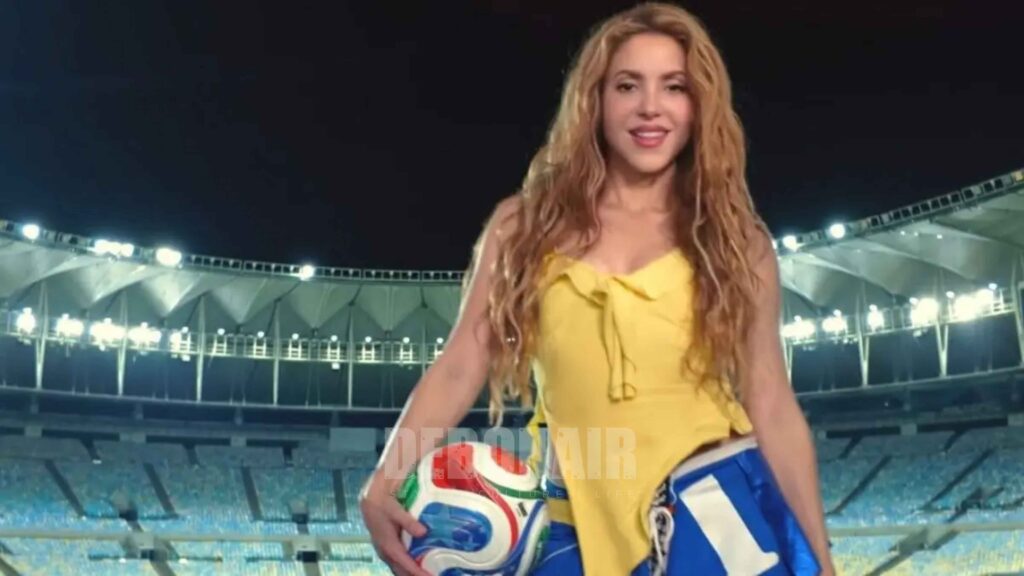
The rest of the lineup did what good supporting lineups do: held the room, kept the energy, didn’t overstay. Mana brought that particular rock-en-espanol weight that hits different live. Los Angeles Azules played cumbia with the kind of ease that only comes from decades of actually believing in the music, not performing belief in it. Danny Ocean was smooth in the way he always is. J Balvin brought noise. It worked, all of it, as a night, as a thing.
But the cameras kept finding her. They usually do.
What struck me, watching it back, is that she wasn’t playing nostalgia. She wasn’t there to take you back to Johannesburg or remind you she exists or give you the hits in a medley. She showed up with a new song, a new collaborator, a neon yellow suit that looked like it was designed to be visible from orbit, and she performed like someone who has figured out the difference between proving yourself and just being yourself. Those are not the same thing. Most artists in their forties with her history would have leaned on the catalogue. She didn’t.
The 2026 World Cup opened across three cities: Mexico City, Toronto, Los Angeles. Three ceremonies. But Mexico kicked off the actual football, Mexico versus South Africa that same night, and Azteca held the whole weight of that opening. The ceremony was the last exhale before the tournament started becoming real.
Sixty-something thousand phones went up when she took the stage. The old stadium creaked with the kind of noise it was built for. And out there under those lights, in yellow that almost hurt to look at, Shakira did the only thing she came to do.
She showed up. All the way.
Stay updated with the latest in fashion, lifestyle, and celebrity stories—straight from the world of Debonair. Follow us on Instagram, X (Twitter), Facebook, Youtube, and Linkedin for daily style and culture drops.

Sana has been covering film, fame, and everything in between for over a decade. From red carpets to rehab rumors, she brings nuance, wit, and an insider’s edge to every story. When she’s not reporting, she’s probably watching Koffee With Karan reruns or doom-scrolling celebrity IG feeds.