




The thing about small films is that they rarely arrive with fireworks.
Most of the time, they slip into the world quietly, like a story told over tea. No giant billboards, no thundering marketing campaigns. Just a few people talking about something they watched that stayed with them a little longer than expected.

That’s more or less how Boong has been moving through the world.
Except suddenly, the quiet film from Manipur is not so quiet anymore.
Yesterday morning, the trailer started circulating online, pushed out across social feeds and film circles. Farhan Akhtar shared it too, which of course helped it travel faster. But what’s interesting is that the trailer itself isn’t trying to shout for attention. It doesn’t have the usual rhythm of commercial teasers, those quick cuts and swelling music cues.
It takes its time.

At the center of the film is a boy named Boong, played by Gugun Kipgen, who looks like the kind of kid you’d see racing down a street after school, with slightly messy hair and eyes full of questions. In the story, his father has been gone for a long time. The adults around him carry the weight of that absence differently, but Boong approaches it with the blunt logic children often have.
If someone is missing, you go find them.
So he decides to do exactly that.
The journey pulls him out of Imphal and toward Moreh, the border town where India leans into Myanmar. Anyone who has spent time in the Northeast knows that borders there are not abstract lines on a map. They’re lived spaces. Markets, military checkpoints, trucks rolling through dust, languages blending.
The trailer hints at all of that without spelling it out. A road stretching forward. A boy moving through unfamiliar places. Moments where you can’t quite tell if he’s brave or simply too young to understand the risks.
And somehow, that makes it more moving.

Watching those few minutes, you get the feeling that Lakshmipriya Devi, who directed and wrote the film, trusts the audience enough not to overexplain anything. She lets the camera sit with the landscape. She lets people speak the way they naturally would. Nothing feels polished into artificial drama.
It feels observed.
But here’s where things get interesting.
By the time the trailer appeared this week, Boong was already carrying a piece of history with it.
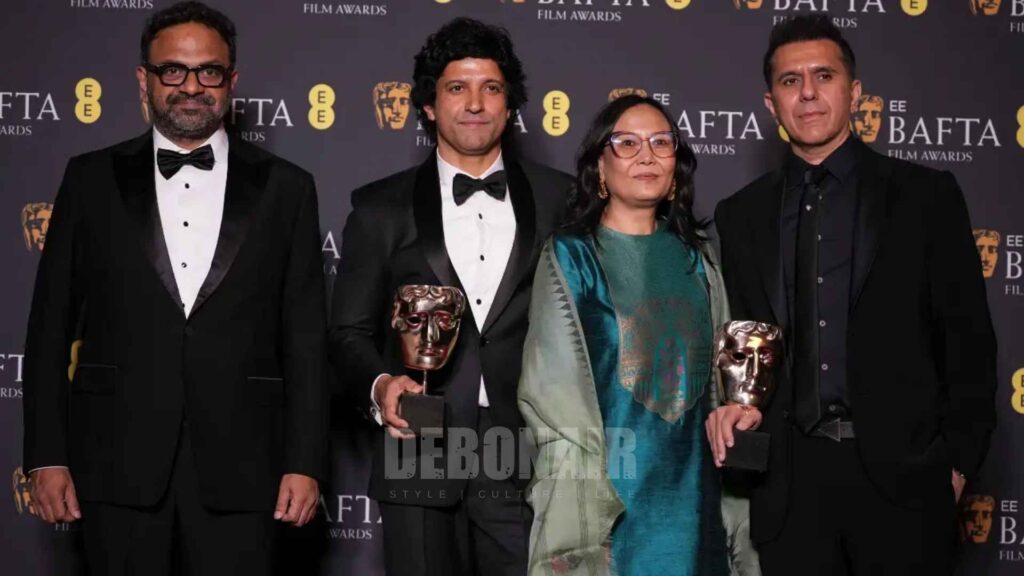
At the 79th British Academy Film Awards in February, the film won the BAFTA for Best Children’s and Family Film. For Indian cinema, that alone would be big news. For a Manipuri-language film from the Northeast, it felt even bigger.
When Lakshmipriya Devi stepped onto the stage in London that night, she said something simple that stuck with people afterward.
“This film is a prayer for peace to return to Manipur.”
No grand speech. Just that one thought.
Maybe that’s why the moment resonated. Because the film itself seems to carry that same quiet sincerity. It’s not trying to represent a region with slogans or sweeping statements. It’s just telling the story of a child navigating a complicated world.
Sometimes that’s enough.
The film had already been drifting through festival circuits during 2025, collecting praise from programmers and critics who tend to keep an eye on regional cinema. But festivals can be strange bubbles. A film can feel celebrated there and remain invisible to most audiences.
That’s about to change.
Tomorrow, March 6, Boong opens in cinemas across India in a theatrical re-release. For many people, it will be the first real opportunity to see the film outside the festival circuit.

The project itself carries an interesting blend of voices behind it. Farhan Akhtar and Ritesh Sidhwani, through Excel Entertainment, are part of the producing team alongside Alan McAlex, with Chalkboard Entertainment and Suitable Pictures also involved. It’s not the most obvious collaboration on paper. A mainstream Bollywood production house backing a quiet regional story.
But maybe that’s exactly why it works.
The film hasn’t been reshaped to chase broader appeal. It remains firmly in the Manipuri language, with subtitles opening the door for audiences elsewhere. The textures of local life remain intact. Markets, homes, hills, conversations that sound like they belong exactly where they’re happening.
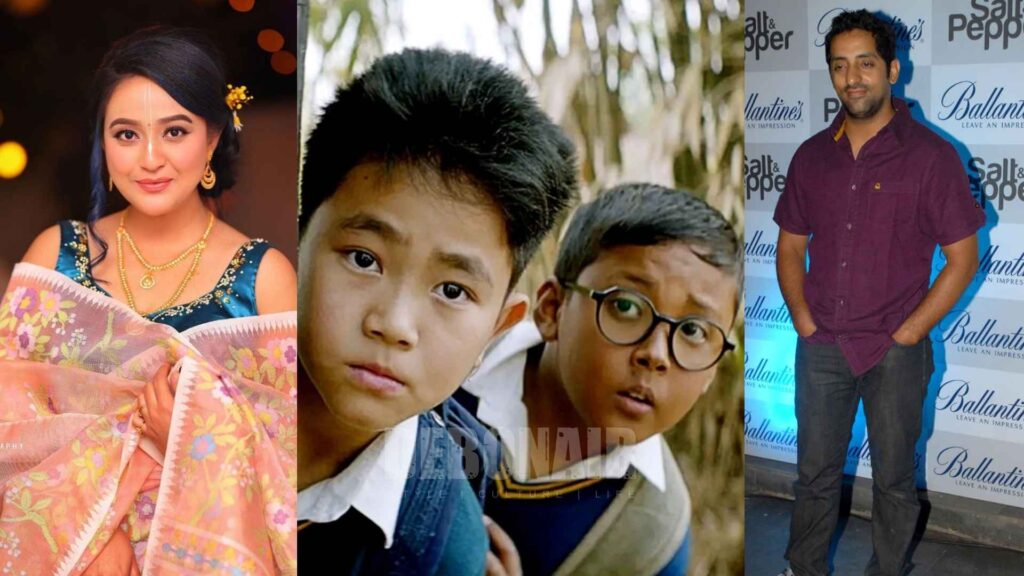
Around young Gugun Kipgen, the cast includes Bala Hijam, Angom Sanamatum, and Vikram Kochhar, each bringing small pieces of authenticity to the world the film builds.
Still, the emotional center of the story sits with that one boy and the stubborn hope driving him forward.
A child searching for his father.
You’d think that premise would feel familiar, maybe even predictable. But from the way people who’ve seen the film describe it, Boong avoids the usual emotional shortcuts. It doesn’t rush toward big speeches or dramatic reunions. Instead it lingers in the uncertainty of the journey itself.
And maybe that’s why the film has started to travel so far.
Over the past week, people outside the region have been discovering pieces of Manipur through conversations around the film. Curious viewers looking up Moreh on maps. Film lovers are asking questions about Manipuri cinema. Festival programmers are revisiting stories from the Northeast that never quite reached mainstream screens.
It’s the sort of ripple effect that happens occasionally when a story arrives at the right moment.
Back in Imphal, though, life probably looks the same as it always does. Morning markets. Schoolchildren in uniforms. Tea stalls are filling with the smell of milk and cardamom.
But somewhere in that city, a film made close to home is now traveling across the country, carrying a story that began with one boy refusing to accept that his father was gone for good.
And that’s the strange beauty of cinema.
A small story leaves its neighborhood. Walks across borders. Finds itself standing under bright lights on the other side of the world. Then comes back home, a little bigger than before.
Tomorrow, when the lights dim in theatres, and Boong finally begins for audiences across India, they’ll meet that boy on the road to Moreh.
The journey might look simple.
But sometimes the simplest journeys carry the heaviest hearts.
Stay updated with the latest in fashion, lifestyle, and celebrity stories—straight from the world of Debonair. Follow us on Instagram, X (Twitter), Facebook, Youtube, and Linkedin for daily style and culture drops

Zayn blends critical thinking with genuine fandom. Whether it’s decoding OTT series arcs or rating the latest Bollywood blockbuster, he writes with clarity, pop fluency, and a dash of irreverence.